

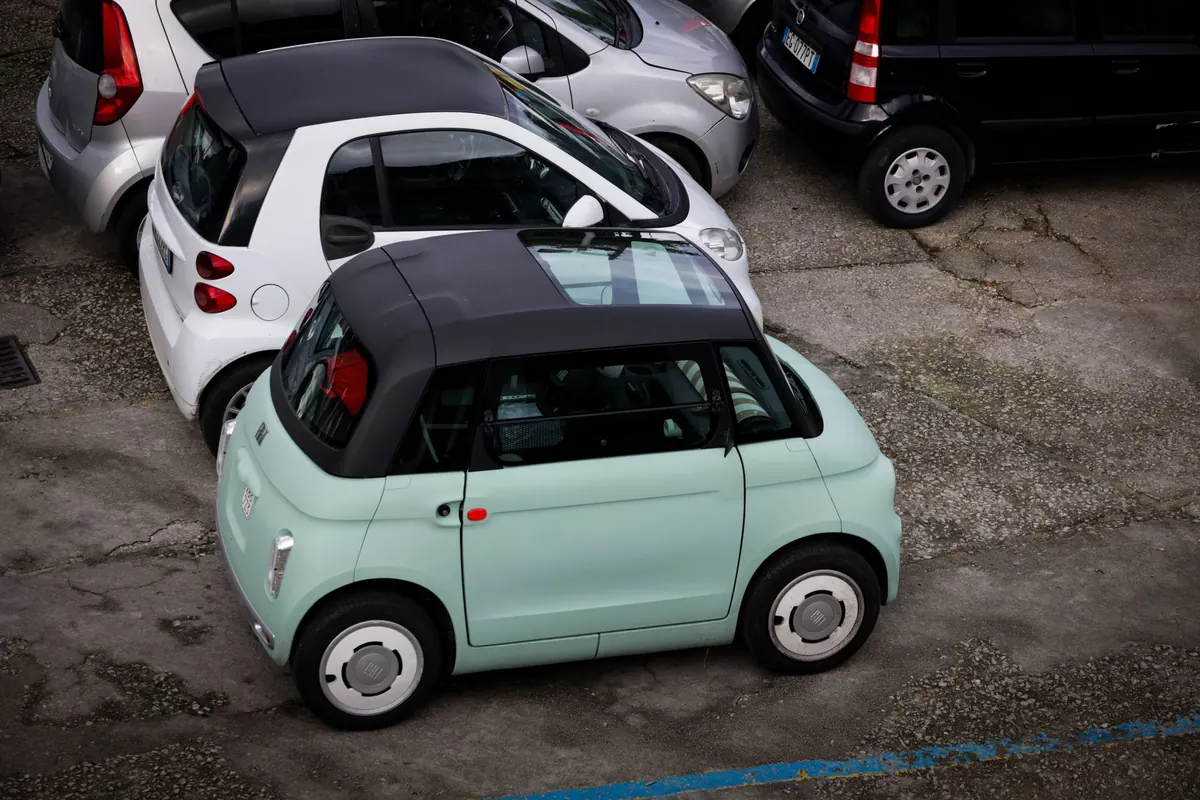
Cities rarely hand you a generous parking space. They hand you a gap between a delivery van and a hatchback, a curb that curves, and a queue of traffic watching. The good news is that a small car is genuinely better at this job than a big one, and not just because it fits. Short wheelbase, tight turning circle, limited rear overhang — the physics are on your side. What usually goes wrong is technique, not the car.
Here is the whole process, from checking the space to switching the engine off.
Why a Small Car Parks Differently
Turning circle is the headline number. A short car rotates more sharply around its centre, so the same steering angle swings the nose and tail through a tighter arc. That is why a small hatchback slots into a space a mid-size saloon has to drive past.
Wheelbase matters just as much. With the front and rear wheels closer together, the tail follows the front more predictably as you reverse. A short rear overhang keeps the back of the car close to where your mirrors say it is, and upright glass gives you a decent view over the rear seats. You have a car that tells you what it's doing — provided you go slowly enough to listen.
Before You Commit to the Space
Have a look before you signal. Pull past the space slowly and check the following:
- Length. A gap about one and a half times your car's length is comfortable in a small car. Closer to a single car length needs the shuffle described below, and a bit of nerve.
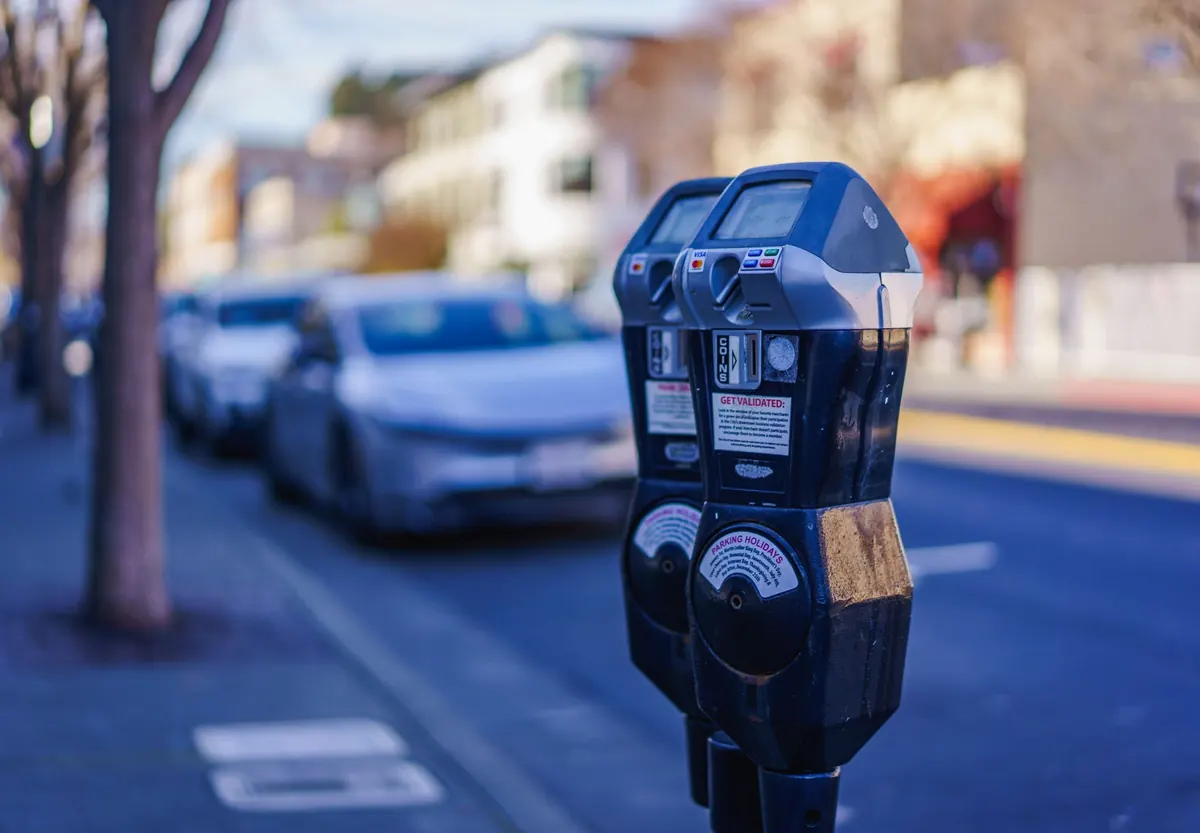
- Obstructions. Driveway lips, dropped curbs, hydrants, bus stops and permit-only zones all change the rules. If you're unsure what applies locally, read the signs and road markings rather than guessing, and check with the relevant authority if it matters.
- Slope and surface. A steep camber or a wet, leafy gutter makes a light car slide more than you'd expect. Plan a gentler approach.
- Your neighbours. Are the wheels of the parked cars turned? Are they sitting close to the line you need? Leave yourself room to correct.
- Behind you. If traffic is queued, a short pause at the roadside beats an aborted manoeuvre halfway in.
The Setup: Pull Alongside, Then Stop
Signal, then draw up parallel to the car in front with roughly half a metre to a metre of gap between you. Closer is better than further — a small gap between the two cars tightens the arc and reduces the angle you need.
Line your rear bumper up with theirs, or nudge slightly past. If your car has a reversing camera or sensors, treat them as a backup to your eyes, not a replacement.
Now set your mirrors. Drop the left mirror (in right-hand traffic) so you can see the curb and part of your rear wheel — you'll use it constantly. Leave the right mirror where it normally sits, for traffic and pedestrians.
The Reverse: Four Moves
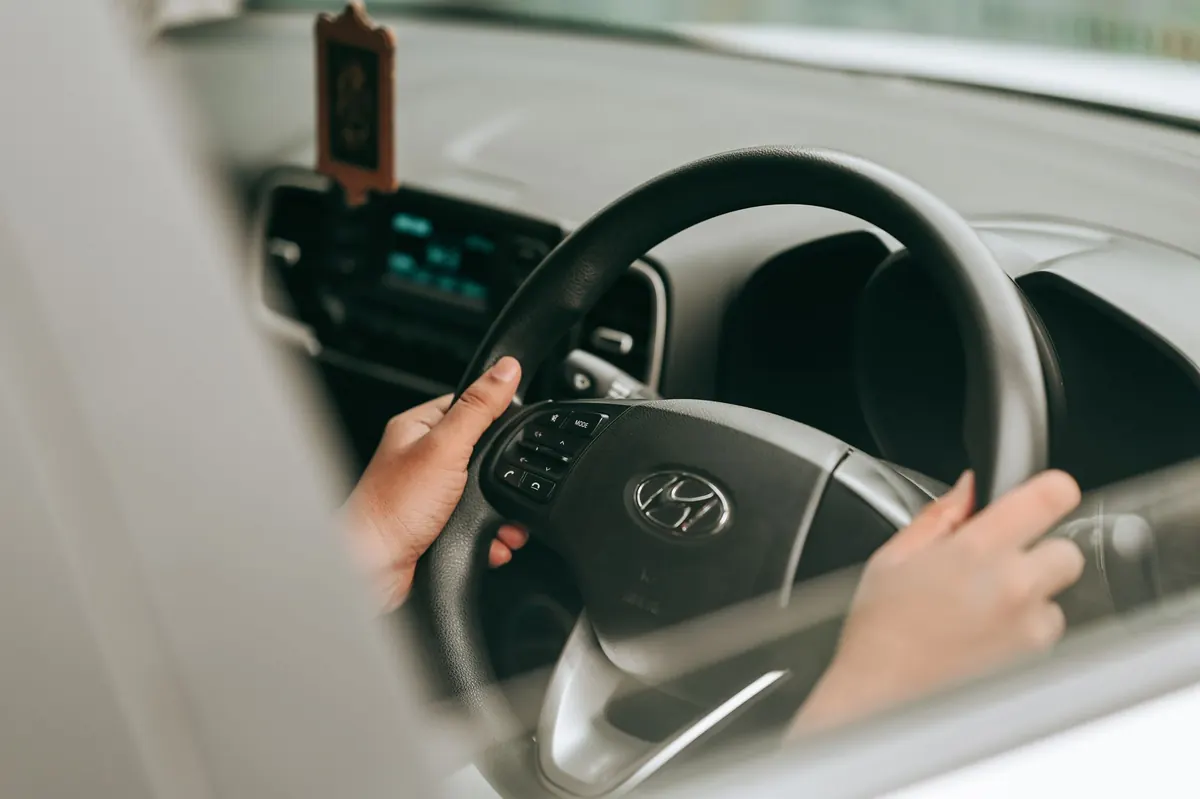
- Reverse slowly, steering full lock toward the curb. One hand on the wheel, foot covering the brake, eyes cycling between the left mirror, your front corner and the corner of the car ahead.
- Stop at roughly 45 degrees to the curb — or when the rear corner of the car in front appears in your left window. This is your pivot point.
- Straighten the wheel, then wind on opposite lock to swing the nose in behind you. Keep the speed to a crawl; the tail swings quickly over the last metre or two.
- Stop before you touch anything. Straighten up, pull forward gently to centre yourself, and check you're not overhanging the curb or blocking anyone's access.
If You've Turned Too Early
The classic failure is a front bumper that ends up too close to the car ahead. Don't fight it. Straighten, pull forward until you have room, and start the reverse again from a cleaner angle. Three calm attempts beat one scraped wing mirror.
Reference Points You Can Actually Trust
Advice about lining your mirror up with a door handle assumes two cars of similar shape. Yours might be a tall hatchback with a stubby nose. So build your own references somewhere quiet: park next to a curb at the angle you want, get out, look at where the curb sits in your left mirror, and remember it. Two or three of those personal markers will do more for your parking than any general rule.
Aim to turn the wheel while the car is creeping, not while it's stationary. Dry-steering on the spot scrubs tyre tread, loads the steering and is slower than turning as you roll the last few centimetres.
The Shuffle: Fine Corrections Without Panic
In genuinely tight spots you'll run out of geometry before you run out of space. That's what the shuffle is for — short alternating movements, a metre or less at a time, each aimed at one specific correction.
- Too far from the curb? Pull forward slightly, then reverse on a tighter angle.
- Nose too close to the car ahead? Reverse straight until you have a clear gap, then angle in again.
- Tail sticking out into the road? That usually means you turned too late. Pull forward and wait longer before counter-steering.
Small increments are the whole point. A small car lets you fix a mistake in two short moves rather than five long ones.
When the Gap Really Is Too Small
Some spaces aren't worth a second attempt, especially with traffic waiting. If two clean tries haven't lined the car up, drive on. Parking isn't a test of character, and a spot fifty metres further along usually costs less time than another shuffle. If you plan to leave the car for more than a few minutes, check the local restrictions on signs before you walk away — time limits, permit zones and loading rules vary by street and by council.
Make It a Routine
Reliable parallel parking in a small car comes down to one habit: go slowly, and check the mirror more often than you think you need to. Low speed buys you time to correct, and constant observation means you spot the curb, the cyclist and the reversing neighbour before they become a problem.
Practise where it's quiet — an almost empty car park with painted bays, or a residential street on a Sunday morning. Run the same four moves ten times in a row. By the tenth, you'll stop calculating and simply park.
Photo: Magda Ehlers / Pexels
Related posts
More stories you’ll love reading