



Put a Citroën Ami beside a Kia Picanto and the difference looks obvious: one is tiny, one is merely small. But the distinction that should shape your decision isn't visual, it's legal. A city car is a car. A microcar usually isn't — and that single fact decides how fast you can go, where you're allowed to drive, and how much metal sits between you and whatever hits you. Both can be brilliant. Neither suits everyone.
Size: Close Enough to Judge by Eye
City cars — the Picanto, Hyundai i10, Fiat 500, Toyota Aygo X — generally run about 3.5 to 3.7 metres long and 1.6 to 1.7 metres wide. Compact, yes, but still a full-width car with four seats and a real boot.
True microcars sit under roughly 2.7 metres, often well under. The Citroën Ami is 2.41 metres. The Microlino is around 2.5, and the Smart Fortwo finished its run at 2.69. Many are only 1.4 to 1.5 metres wide, so two can occasionally share a single bay and one will squeeze into gaps no ordinary car should attempt.
Japan takes a third route worth knowing about. Kei cars are capped at 3.4 metres long, 1.48 metres wide and 660cc, yet they're registered as ordinary cars with their own tax class. Size doesn't make a quadricycle. Classification does.
The Legal Line Is the One That Matters
Europe and several other markets split small four-wheelers into quadricycle categories. This is where a microcar stops being a small car and becomes something else entirely.
Light quadricycles
Capped at 45 km/h by design, with mass limits around 400–425 kg excluding the battery, and either a very small petrol engine or an electric motor of roughly 4 kW. The Ami is the best-known current example. Think of it as a weatherproof moped with a roof and a passenger seat.
Heavy quadricycles
Still built to quadricycle rules rather than passenger-car rules, but with up to 15 kW and top speeds that can reach 80–100 km/h. Many vehicles sold as microcars by brands such as Ligier, Aixam and Microcar land here, as do faster versions of the Renault Twizy.
Two consequences follow. Licensing: some countries allow 16-year-olds to drive light quadricycles, while heavy quadricycles typically require a full car licence. In France, for instance, a light quadricycle can be driven by someone as young as 14 with a road safety certificate (BSR), while in the UK the minimum age is 16 with a moped licence. Road access: a 45 km/h vehicle has no business on a motorway, and in several countries it's legally barred from one. Rules vary by country and sometimes by region, so confirm the details with your local licensing authority before buying — and ring your insurer, because not every one treats quadricycles the way it treats cars.
Speed, Range and Where You Can Realistically Go
A city car will sit at motorway speeds, cover 400 km or more between fill-ups if it's petrol, and handle a weekend away without a second thought.
A microcar asks you to plan. A light quadricycle's 45 km/h ceiling means it's strictly an urban tool. It's fine for city streets, school runs and short errands, but it will feel dangerously slow on a dual carriageway and is often banned from motorways altogether. Electric range is modest, too: the Citroën Ami offers about 75 km on a charge, while the Microlino can manage up to 230 km depending on battery choice. Neither supports fast charging — you're looking at a few hours from a domestic socket. Petrol microcars like the Aixam can cover several hundred kilometres on a tank, but they're noisy, slow and still limited to quadricycle speeds.
Heavy quadricycles bridge the gap slightly. With 80–100 km/h capability, they can handle main roads and short motorway bursts in countries that permit it, but they still lack the composure and range of a proper car. If your journey regularly involves 100 km/h roads or long distances, a city car is the only sensible choice.
Safety: The Metal Between You and the Road
This is the section that should give any potential microcar buyer pause. Quadricycles are not required to meet passenger-car crash safety standards. They don't undergo Euro NCAP testing, and many have no airbags, no ABS, no electronic stability control and only minimal crumple zones. The Citroën Ami, for example, has no airbags at all. It has no ABS, no power steering, and a tubular frame. It's designed for low-speed urban use, and in a collision with a larger vehicle, the outcome is unlikely to be favourable.
Contrast that with the Smart Fortwo. Despite being only 2.69 metres long, it was engineered as a proper car. It had a Tridion safety cell, airbags, ABS and ESP, and it performed reasonably well in crash tests for its size. The Fortwo proves that small size doesn't have to mean compromised safety — but it also proves that building a safe small car costs money, which is why it was never cheap.
City cars like the Picanto, i10 and 500 are subject to full passenger-car regulations. They come with multiple airbags, stability control, and in recent years, advanced driver assistance systems like autonomous emergency braking. They may be small, but they're designed to protect you in a crash. That difference in engineering is not visible on the forecourt, but it's the one you'll appreciate most when something goes wrong.
If you're considering a microcar, ask yourself one question: what happens when a 2-tonne SUV hits me? The honest answer should shape your decision.
Running Costs and Ownership: The Financial Reality
Microcars often win on purchase price. A new Citroën Ami starts at around €8,000 (or £7,695 in the UK), while a Kia Picanto begins closer to £13,000. Electric microcars cost pennies per kilometre to run, and in many countries they're exempt from road tax and congestion charges. Insurance can be cheaper, but not always — some insurers are wary of quadricycles, and premiums can be surprisingly high for young drivers.
Maintenance is simpler: fewer parts, smaller tyres, no complex emissions equipment on electric models. But there are hidden costs. Resale values for quadricycles are often weak, and some brands have limited dealer networks, making servicing and repairs inconvenient. City cars, by contrast, hold their value better, have widespread dealer support, and can be serviced at any independent garage.
Charging an electric microcar at home is straightforward if you have a driveway or garage, but if you rely on on-street parking, running a cable across the pavement is impractical and sometimes illegal. For many urban dwellers, that alone rules out an electric microcar.
The Verdict: Match the Vehicle to the Job
So which should you buy? It depends entirely on what you need.
- Choose a city car if: you need motorway capability, regularly carry passengers or luggage, want modern safety equipment, and value long-term flexibility. It's the only option that works as an everyday car.
- Choose a microcar if: your driving is almost entirely urban, you have a second car for longer trips, you want the cheapest possible mobility, or you're buying for a teenager who only needs to pop to the shops. Just go in with your eyes open about safety, speed and range.
- Consider a Kei car if: you want something smaller than a city car but still legally a car, with proper safety features and motorway capability. They're not officially sold in many markets, but imports exist. They occupy a useful middle ground.
The visual difference between a city car and a microcar is trivial. The legal, safety and practical differences are enormous. Buy the one that matches your actual journeys, not the one that looks cutest in the showroom.
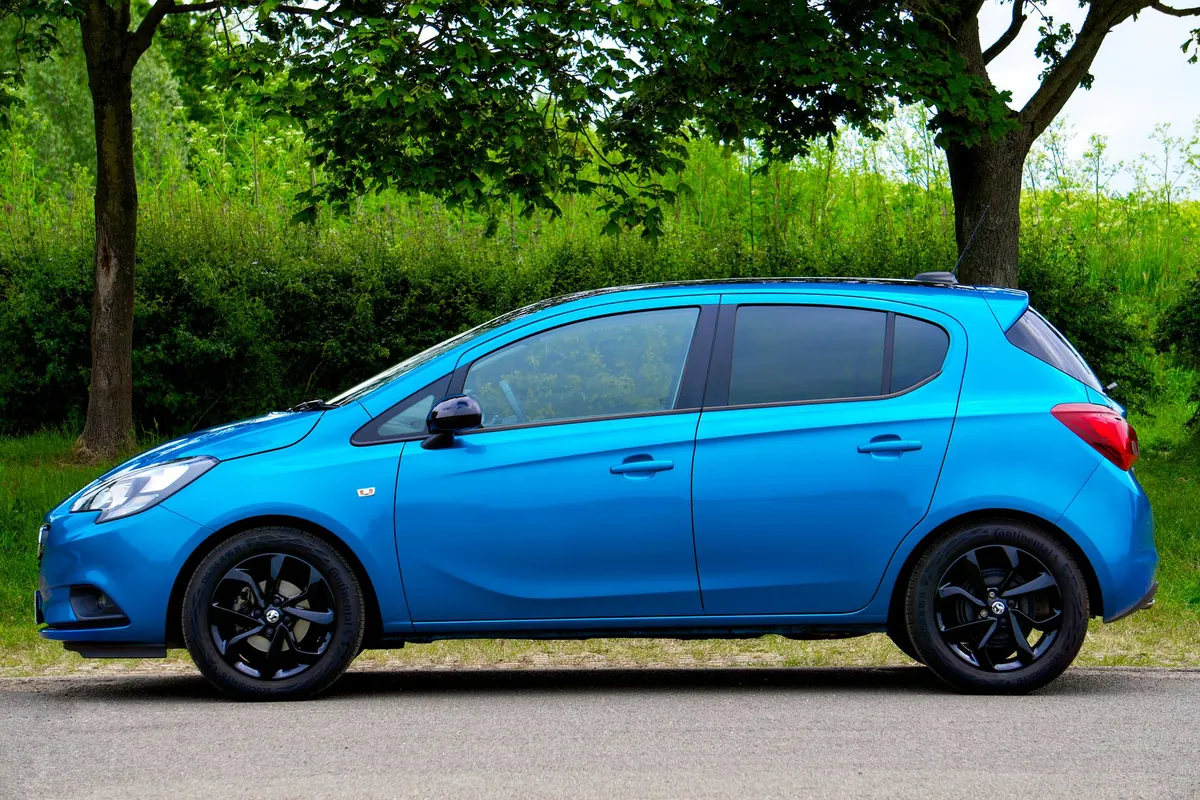
Photo: Mike Bird / Pexels
Related posts
More stories you’ll love reading