

A 660cc kei car, a classic Mini, a Smart Fortwo, an original Fiat 500 — none of them were designed with a 900-mile holiday in mind. That does not mean they cannot do it. It means the trip has to be built around the car rather than the other way round. Plan properly and a microcar tour can be one of the most enjoyable ways to cross a country: slow enough to notice things, cheap enough to say yes to the detour, and small enough to park anywhere at the end of the day.
Build the Route Around the Car, Not the Map
The instinct is to point at a destination and let the satnav choose the fastest roads. Resist it. A small engine with short gearing will sit at high revs on a motorway for hours, which is tiring, thirsty and hard on the mechanicals. Two-lane A-roads and B-roads suit these cars far better: lower speeds, less wind buffeting, more chances to stop.
Look at the profile of your route as well as the distance. A 200-mile day over mountain passes takes twice as long as 200 miles of flat valley road, and a 1.0-litre engine loses more of its power at altitude than a bigger one. Add generous margins — if the mapping app says five hours, budget seven. Then check where fuel stations and towns actually sit along the way, especially on rural stretches where the next pump can be a long way past the next hill.
Mechanical Prep You Can Do in an Afternoon
A long trip exposes every small weakness a car has. A tired battery that just about starts a five-mile commute will fail after a cold night in a car park. A weeping coolant hose will announce itself on the third climb. Spend an afternoon on the following before you load anything:
- Fluids: engine oil, coolant, brake fluid, screen wash. Top up and note anything that needs topping up again.
- Tyres: tread depth, sidewall cracks, and pressures set for a fully loaded car, not solo driving. Check the spare or inflator kit too.
- Battery: have it tested if it is more than a few years old.
- Wipers and bulbs: cheap, easy, and miserable to deal with at the roadside in the rain.
- Brakes: pads, discs and handbrake travel. Long descents punish marginal brakes.
- Belts and hoses: look for glazing, cracking and soft spots.
Pack a small spares box: a litre of oil, a spare bulb kit, fuses, cable ties, a length of hose tape, a basic tool roll, a torch and a tyre pressure gauge. None of it weighs much, and all of it can save a day.
Pack Light, Pack Soft
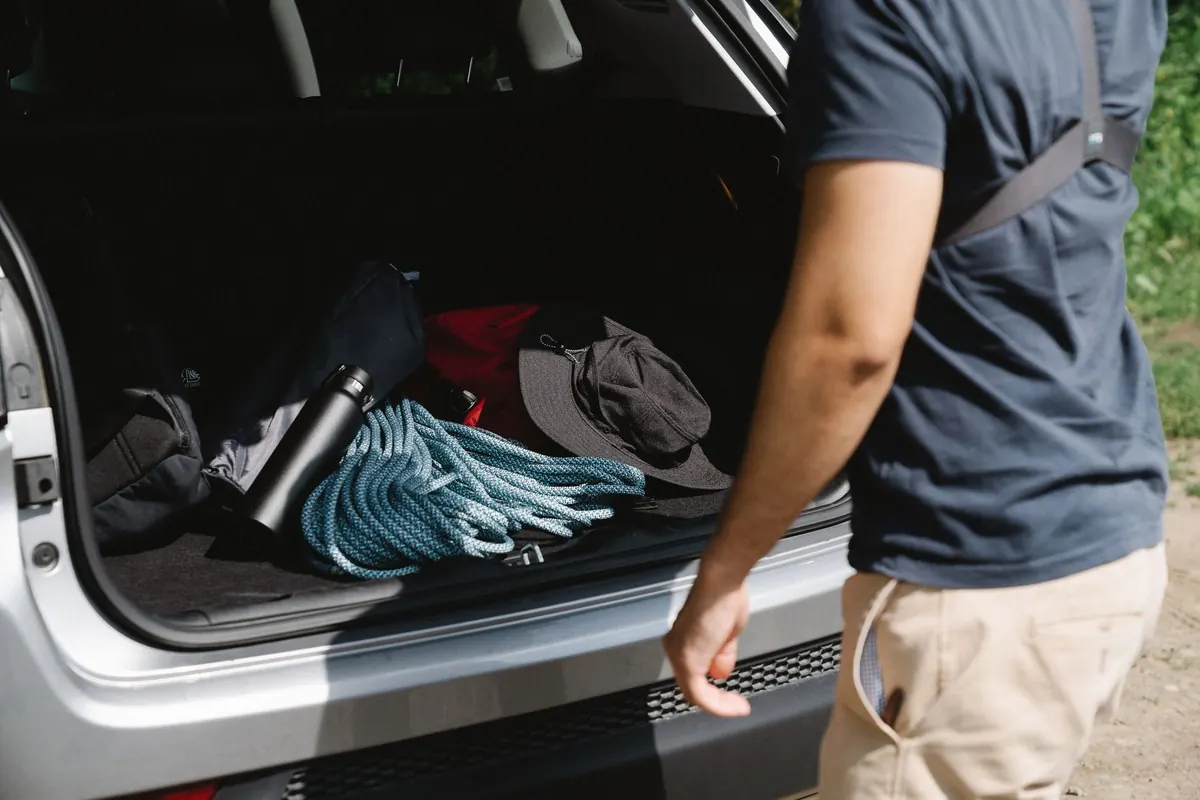
Boot space is the real constraint. In most microcars you are working with something between a large shopping bag and a small suitcase, so the rule is soft bags, no hard cases. Soft holdalls squash into odd shapes and can be wedged behind seats, under the parcel shelf or in the footwell of an unused rear seat.
Be careful with roof boxes and roof bars. Many small cars have a surprisingly low roof load limit, sometimes under 50 kg including the bars themselves, and a box on a light car adds drag that hurts both fuel economy and stability in crosswinds. Check your handbook before buying anything.
A packing list that actually fits
- One soft bag per person, roughly cabin-bag size, and one shared bag for shoes and layers.
- Layers rather than bulky coats — they compress and you can regulate temperature in a car with modest heating.
- A small cool bag with water and snacks. You will stop less often if you are not hunting for food.
- Phone mount, charging cables and a power bank or 12V splitter.
- Paper map or downloaded offline maps. Signal disappears in exactly the places you need it.
- Microfibre cloth, bin bags, and a folding umbrella.
- First-aid kit, warning triangle and hi-vis vest — and check what the countries you are crossing legally require.
Plan Comfort Stops, Not Just Fuel Stops
Thin seats, short suspension travel and a lot of road noise add up. Treat 90 minutes to two hours as the sensible maximum between stops, and get out of the car properly each time — walk for five minutes rather than standing by the pump. Stretch your legs, your back and your shoulders.
Noise is the underrated problem. Earplugs or decent earbuds at low volume reduce fatigue more than you would expect on a long day. So does heat management: a small car cabin gets stuffy fast, and a stuffy driver makes mistakes. Crack a window, keep water within reach, and swap drivers if you have a second one on board. If you feel drowsy, stop and rest properly. Do not push on.
Fuel, Range and Big-Road Etiquette
Small tanks mean frequent fills, so refuel earlier than you would in a larger car — when you hit a quarter tank, not when the light comes on. Fuel up before remote sections rather than after.
On motorways, sit with the slower traffic and accept it. You will be overtaken constantly; let it happen and keep a steady lane position. Give lorries plenty of room, both when passing and when being passed, because the turbulence off a large vehicle moves a light car around noticeably. In strong crosswinds, reduce speed. And if you are planning to drive at night, check your headlights are aimed correctly and working well — many small cars have modest lighting.
The Night Before You Leave
Do the boring jobs early so the morning is calm. Fill the tank, set tyre pressures for the load, charge everything, load the car the night before so you know it fits, and print or screenshot your route and any booking confirmations. Keep documents — licence, insurance, registration, breakdown cover — in one place you can reach without unpacking the boot.
Finally, write down a rough daily mileage you know the car and the driver can handle comfortably, and stick to it. A microcar road trip works best when the point is the journey rather than the arrival. Drive within the car's limits, stop when you are tired, and it will take you a lot further than anyone expects — including you.
Photo: Katya Wolf / Pexels
Related posts
More stories you’ll love reading